Úbeda and Baeza in 3 Days: What to See and Do
Here are the best places to visit in Úbeda and Baeza if you only have 3 days… Let’s go!
If you love history, architecture and food, Úbeda and Baeza are a destination you can’t miss. In case you’re short of time, we’ve put together a route with the top things to see in Úbeda and Baeza in 3 days.
These two jewels of the Spanish Renaissance, both UNESCO World Heritage Sites, will take you back in time with their cobbled streets, palaces and varied cuisine.
You’ll visit the most iconic monuments and places, where you can switch off and lose yourself in all their history.
IMPORTANT! This is a light route, with lots to see in just 3 days. We’ve focused on seeing the sights from the outside, but you can adjust the itinerary to spend more time at any of them and visit inside, which we recommend.
Day 1, Úbeda:
1. Hospital de Santiago:
The first stop on our 3-day route is the Hospital de Santiago. It was built between 1562 and 1576 and worked as a hospital until 1975. Today it is one of the town’s most important cultural centres, with a library, concerts, exhibitions and more.

2. Church of San Isidoro:
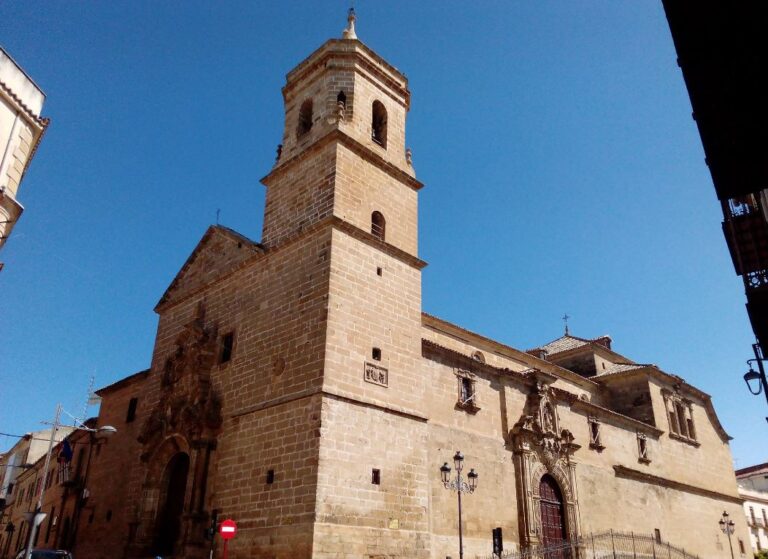
A 5-minute walk along Calle Obispo Cobos brings you to this church, one of the town’s first parishes. Its façade is Gothic, while the interior is Renaissance.
The church houses beautiful Holy Week brotherhood statues. Don’t miss the chance to peep through the outside window on the corner of the north side to see the chapel of the Cofradía de La Columna.

3. Torre del Reloj (Clock Tower):
Two minutes up the street, you’ll find this iconic tower in Plaza de Andalucía. It once defended the now-demolished Puerta de Toledo gate. Inside are the oldest bells in Úbeda.
4. Church of the Santísima Trinidad:
On one side of the square stands the Church of La Trinidad, one of the town’s few Baroque monuments, built in the 17th and 18th centuries. A curious fact: after it was confiscated by the state in the 19th century, it served as a hospital and a school before being restored and returned to religious use.
5. Olive Grove Interpretation Centre:
Walking down Calle Corredera, you’ll find the Holy Week monument and, a couple of minutes further on, the Olive Grove Interpretation Centre, where you can enjoy olive oil experiences, visit the museum and join tastings.
6. Arco de la Corredera:
Through a narrow street you’ll pass the Torre de las Arcas (or del Castillón) and reach Calle Ventanas, where you’ll see the Arco de la Corredera. Go through the arch to continue the visit.
7. Palace of Don Luis de la Cueva:
Carry straight on down the street to find this palace in Plaza Josefa Manuel. It was built in the 15th century, and its 17th-century façade features a large arch and the coats of arms of the Cueva family.
Legend has it that a secret passage connects it to the Palacio de Vázquez de Molina, used for clandestine political meetings.
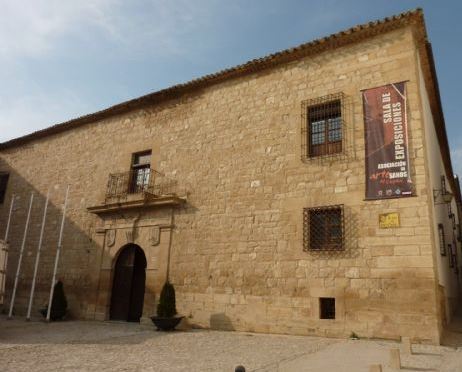
8. Palacio de los Porceles (outside):
A few minutes down Calle de las Parras is the Palacio de los Porceles, with a classic Renaissance façade. At the moment it can only be seen from the outside.
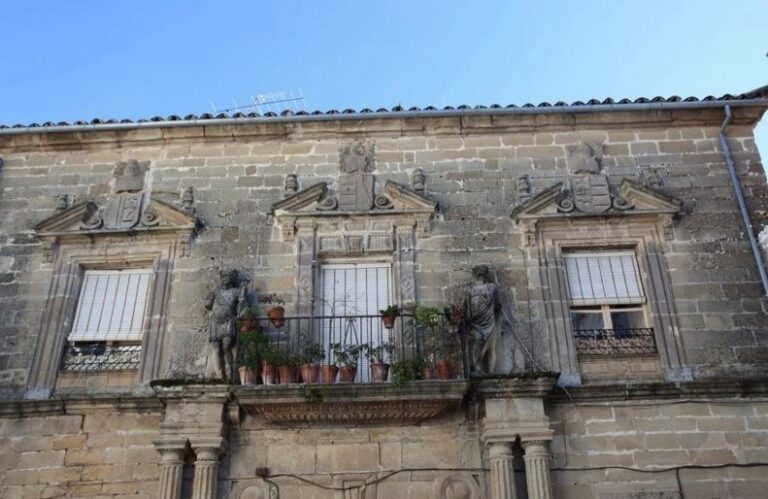
9. Sinagoga del Agua (Water Synagogue):
A few metres further down the street, on the left, is the Sinagoga del Agua. You can book a guided visit to see its wells and underground galleries and learn about its history.
Make time for it on your 3-day Úbeda and Baeza route: the guided visit is well worth it and doesn’t take long. You can book on its website.
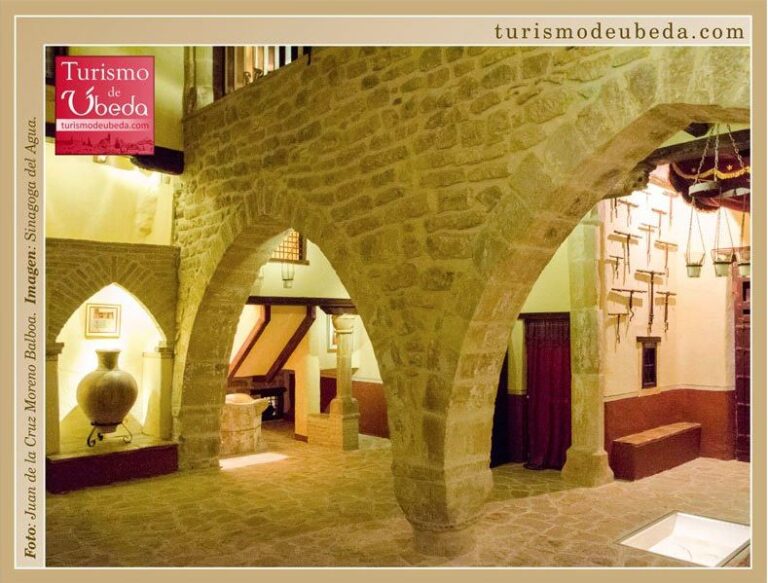
10. Tower of the Palace of the Counts of Guadiana:
Go down Calle de las Parras and cross Calle Real to reach Calle Juan Pasquau, where you’ll see the tower. This emblematic tower is a superb example of palace architecture, one of the most majestic in Spain, and the palace is now a hotel.
Built in the early 17th century in Renaissance style, it shows off all the architectural details of its time. Not so long ago, it housed the Carmelite school of Úbeda.
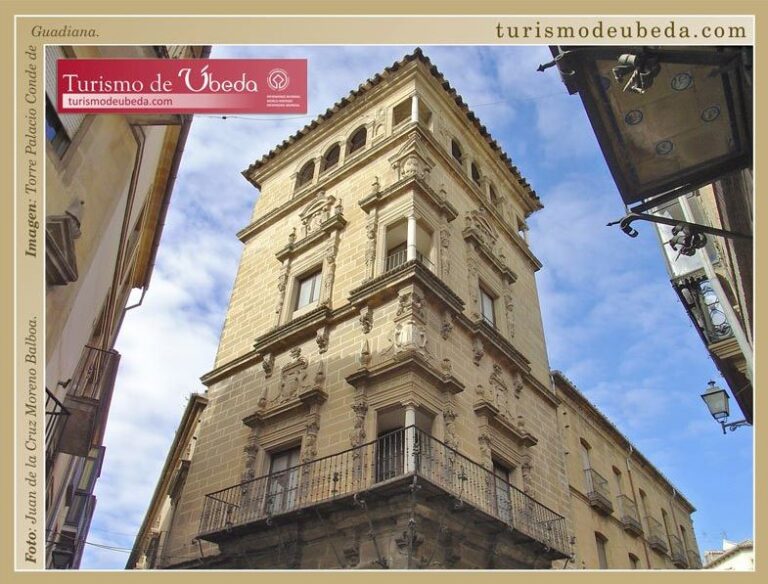
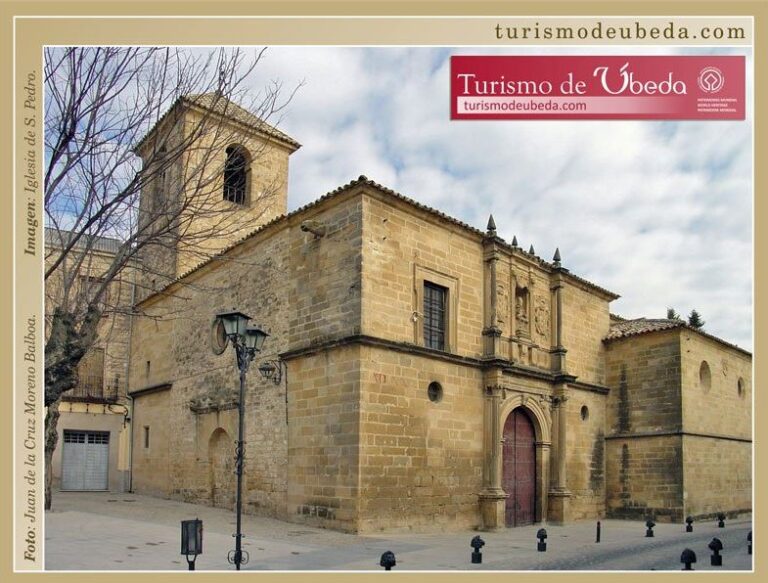
11. Plaza and Church of San Pedro:
About 30 metres along the alley is the well-known Plaza de San Pedro, home to its emblematic church, one of the oldest in the town.
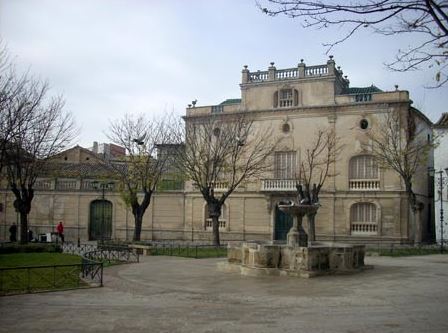
12. Palacio de los Orozco:
On the other side of Plaza de San Pedro stands this large palace. Built in the late 19th century, it is the town’s only 19th-century monument, influenced by French Art Nouveau and Modernisme. It inspired Úbeda-born writer Antonio Muñoz Molina’s novel Beatus Ille.
13. Torreón del Rastro:
Three minutes away, towards Plaza de Andalucía, is the Torreón del Rastro, where the first day ends. It was once used as a home and an inn, and still preserves remains of the wall-walk and the town walls it protected.
Day 2, Úbeda:
On our 3-day route through Úbeda and Baeza, the second day starts a few minutes from where we finished the day before: at Calle Cervantes 6, home of the archaeological museum.
1. Casa Mudéjar (Archaeological Museum):
This is the home of Úbeda’s archaeological museum, with Roman and Iberian remains found at sites across the province of Jaén, all in a house with Moorish architecture. You can visit during opening hours.

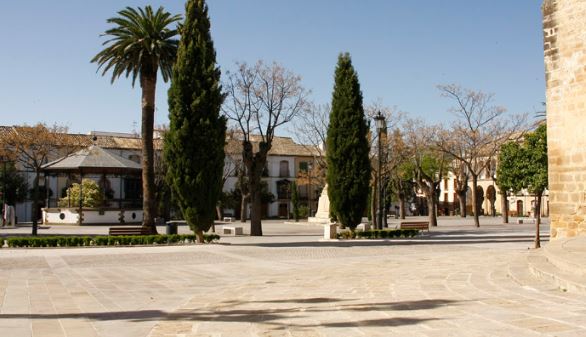
2. Plaza 1º de Mayo:
A few metres further down, we come out onto the “Paseo del Mercado”, as locals call it. Under Muslim rule this square was used as a market, and later as a bullring. In the centre stands a statue of San Juan de la Cruz (St John of the Cross) next to an amphitheatre, and the square is surrounded by houses, the Church of San Pablo and the music conservatory.
On one side of the square you’ll find the house where the singer Joaquín Sabina was born, marked by a discreet little sign on its façade… can you find it?
3. Church of San Pablo:
The Church of San Pablo in Úbeda is a magnificent example of Gothic and Renaissance architecture, with an impressive rose window and a sturdy bell tower. Inside are many altarpieces and chapels, making it a historical and artistic treasure of the town.

4. Old Town Hall:
On a corner of the square is this Italian-influenced building. It was originally designed as a court for council meetings (back in the 16th century) and later served as the town hall. Today it houses the music conservatory.
If you’re starting the route hungry, there’s a great pastry shop beside the conservatory and several cafés a few metres away on Calle Real.
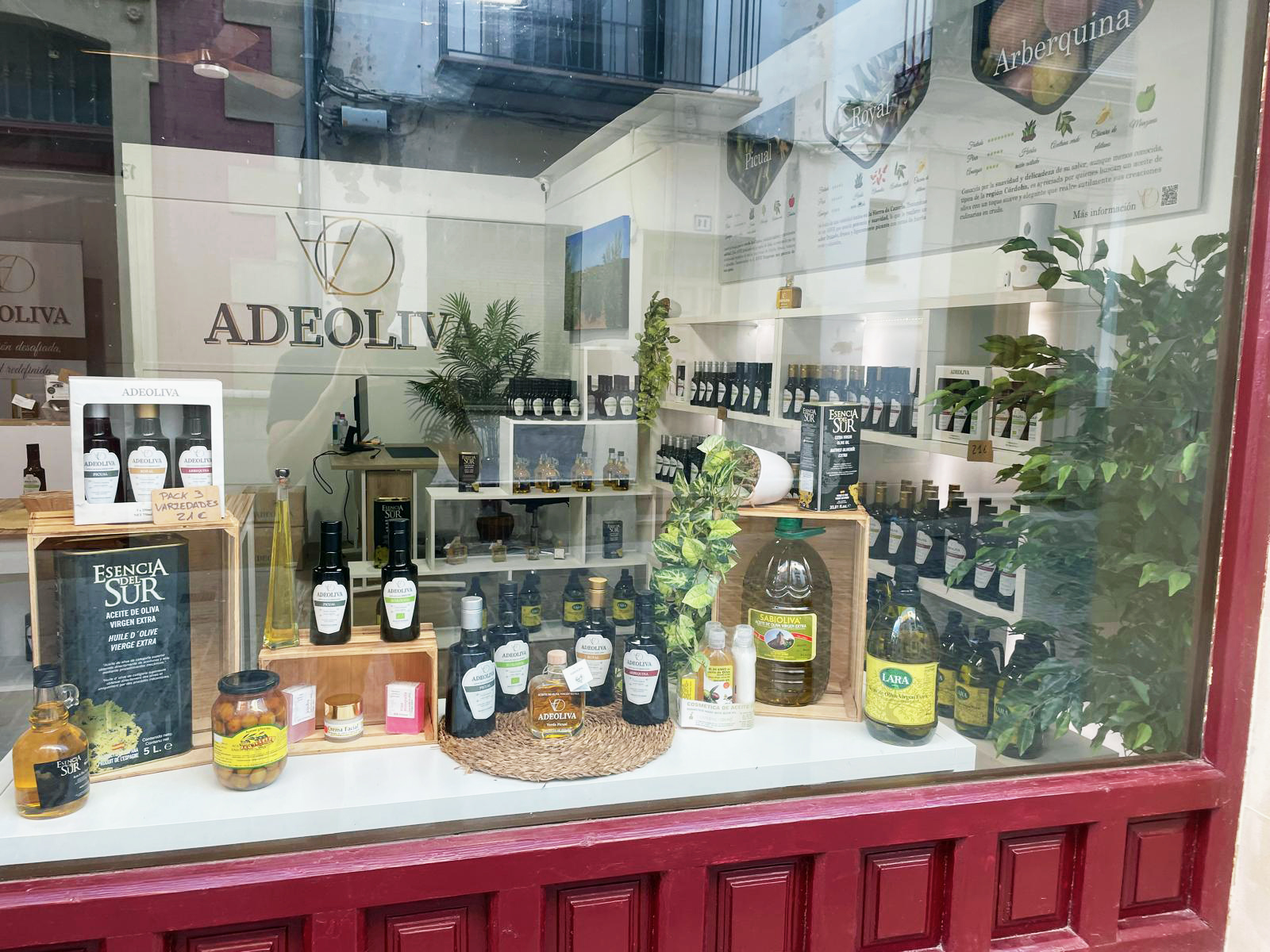
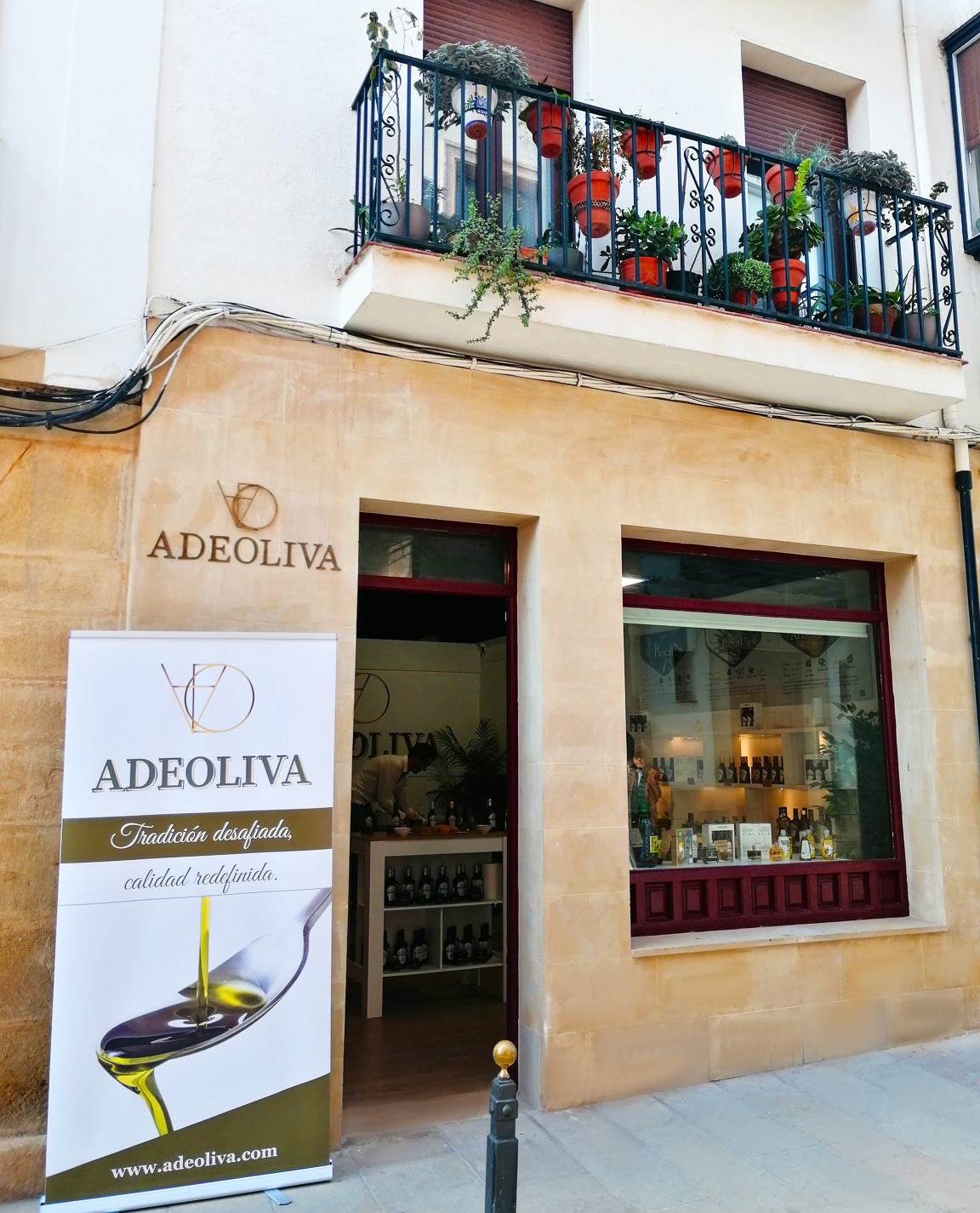
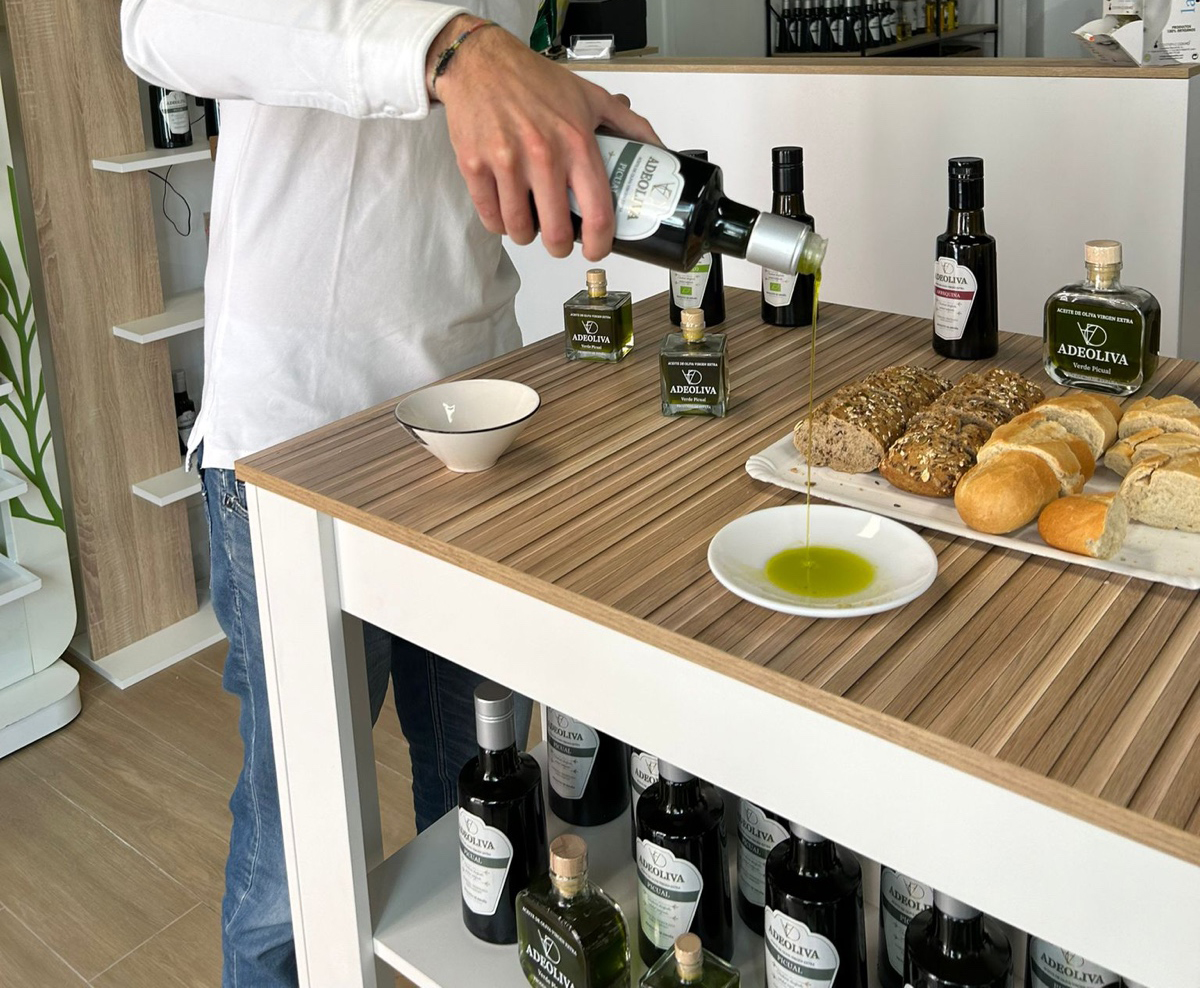
Before carrying on, we welcome you to our ADEOLIVA SHOP on this very street, Calle Juan Ruiz González 14 (click here for Google Maps). Come and discover the best olive oils from Úbeda and get all kinds of tips for Úbeda and Baeza.
Visiting us comes with a reward!
Come to the shop and tell the staff you’re following our Úbeda and Baeza guide. Give them this coupon code and get €5 off purchases over €30!
COUPON: adeolivatour20
Special offer: To book a PRIVATE OLIVE OIL TASTING in Úbeda from €5 per person, call or message us on +34603458558 and we’ll be delighted to welcome you.
And on we go…
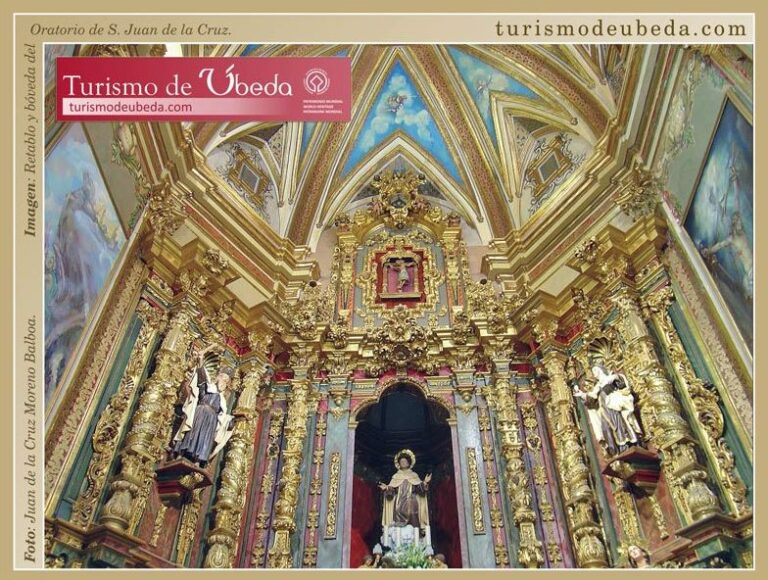
5. Church of San Miguel and San Juan de la Cruz Museum:
Along Calle San Juan de la Cruz, you’ll come face to face with the Church of San Miguel, also known as “Los Carmelitas Descalzos” or “Los Frailes”, as it stands next to the convent.
On the right is the entrance to the San Juan de la Cruz Museum, a must for the devout, as relics of the saint are kept here for veneration.
6. Mirador del Salvador and Puerta de Santa Lucía:
Now walk a little through Plaza del Carmen and Calle Navarro to reach the town’s beautiful viewpoint over the sea of olive trees. Take your time to rest and take photos: the place deserves it.
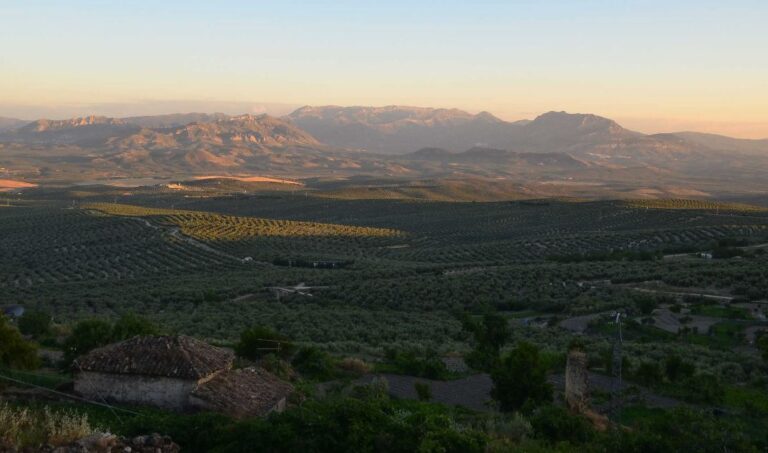
Next to the viewpoint, set in the town walls, is the Puerta de Santa Lucía, one of the three gates that surround the town (together with the Puerta de Granada and the Puerta del Losal).

7. Plaza Vázquez de Molina:
After the break, continue down Baja del Salvador to reach the most impressive place in town, Plaza Vázquez de Molina. The square is surrounded by historic buildings of priceless value. Let’s look at them one by one:
8. Sacra Capilla del Salvador:
If the outside is impressive, the inside is no less so. It is one of the most beautiful chapels in town.
You can visit during services, and it is also open to the public with a ticket and audio guide. Ask at the side entrance of the chapel.

9. Palacio del Deán Ortega:
Next to El Salvador is this palace, now converted into the town’s Parador hotel. Don’t miss its inner courtyard, and stay the night if you get the chance.
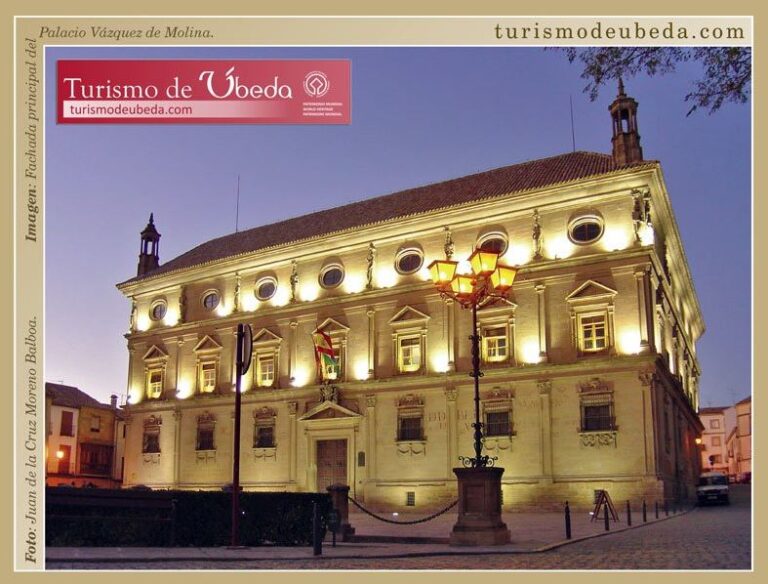
10. Town Hall (Palacio de las Cadenas):
Úbeda Town Hall, known as the “Palacio de las Cadenas” (Palace of the Chains), stands out for its elegant Renaissance façade, named after the iron chains that once hung at its entrance and give it a majestic, distinctive air.
Its impressive architecture and harmonious decoration make it one of the most iconic and photographed buildings in town.
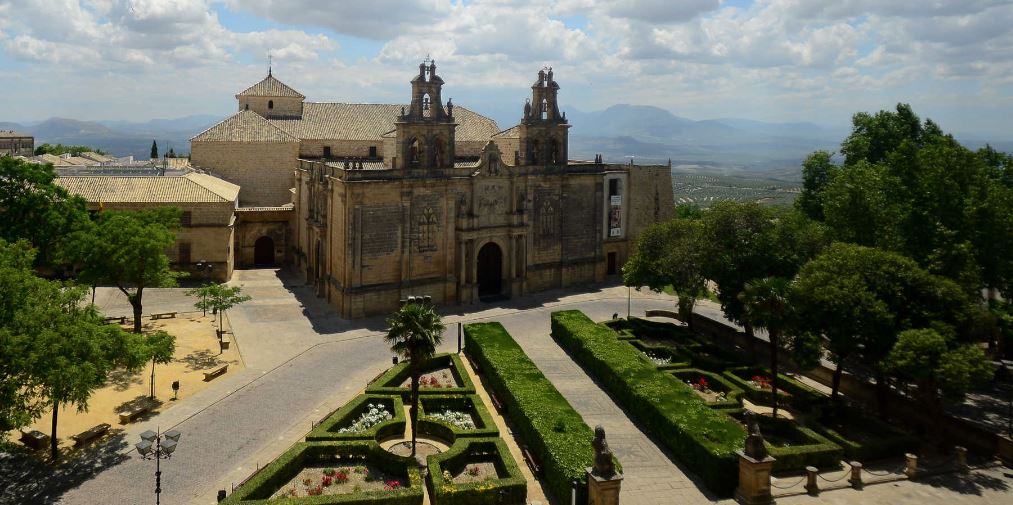
11. Basilica of Santa María de los Reales Alcázares:
Opposite the town hall is the Basilica of Santa María de los Reales Alcázares. Its architecture is striking, with an imposing Gothic-Mudéjar façade and an interior richly decorated with Renaissance and Baroque elements.
This historic monument combines spirituality and architectural beauty, and is at the heart of the town’s religious and cultural life.
12. Palacio de Vela de los Cobos:
Continue up Calle Juan Montilla (next to the town hall) to the Palacio Vela de los Cobos. Behind its imposing three-storey façade is a family museum, and the owners will kindly show you around. You need a ticket for the visit (link).
Highlights are its impressive library, works of art and collection of paintings.
13. Palacio Anguís de Medinilla and Santa Clara:
Continue up the street and take the first left to reach this palace opposite Plaza Álvaro de Torres. Built in 1627, it has kept its façade and structure intact, as well as its furniture and inner courtyard.
Further on you’ll find Plaza de Santa Clara and its cosy church. Don’t miss the chance to buy traditional sweets from the nuns who live in the convent. They’re fantastic!
14. Casa Museo Andalusí:
Continue along the street and turn left to reach the Casa Museo Andalusí. This museum offers a fascinating journey into the past, with a careful recreation of a typical Andalusí home and way of life in medieval Andalusia.
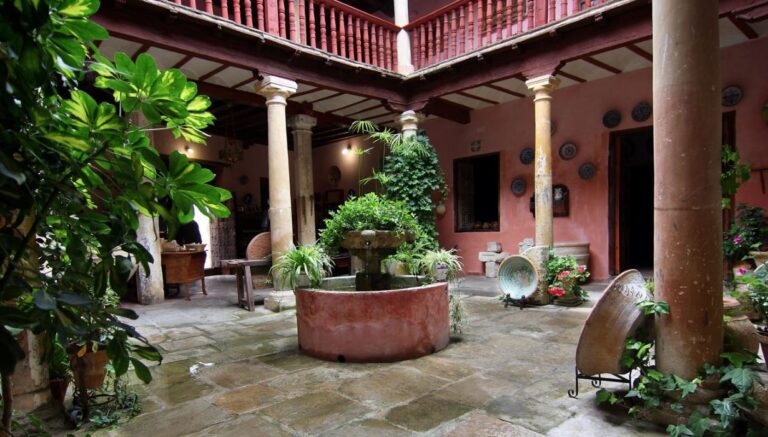
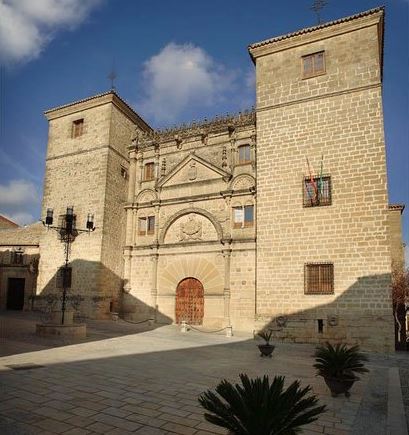
15. Casa de las Torres:
This time it’s a bit of a walk to our next stop, the Casa de las Torres, so follow the map or your GPS.
This palace of medieval origin was built around 1520. Today it is an art school.
16. Church of San Lorenzo:
A unique church, much loved by locals. In the 19th and 20th centuries it fell into decline: it stopped being a parish church and closed its doors, and its condition worsened.
In the early 21st century, after a popular campaign, restoration began. Today it hosts events, with the aim of becoming a social and cultural centre. Its ivy-covered façade is one of its greatest charms.
17. Mirador de San Lorenzo:
Opposite the side door of the church is the viewpoint park. With these stunning views from the Mirador de San Lorenzo, we say goodbye to our route through Úbeda.
If you want more, walk down to the Puerta de Granada and follow the town walls back to the Mirador del Salvador. The views are spectacular!
NOTE: You can find the opening hours of many of these monuments on the official Andalusia tourism website https://www.andalucia.org/en/
Day 3, Baeza:
We start the last leg of our 3-day route through Úbeda and Baeza. The starting point is Plaza de Santa María in Baeza, in the heart of the old town.
Parking in Baeza’s old town is quite difficult, but you’ll easily find an underground public car park and some free on-street parking nearby (around the bullring, Calle Puerta de Córdoba, “Parking Baeza”…).
If you want to fuel up before the walk, have breakfast with good toast and local extra virgin olive oil at one of the cafés on Paseo de la Constitución, a few minutes from the starting point.
1. Plaza de Santa María:
Several monumental buildings surround this square, and we’ll visit them next. In the centre is the Fuente de Santa María fountain, and around it are the Cathedral, the University and the Casas Consistoriales.
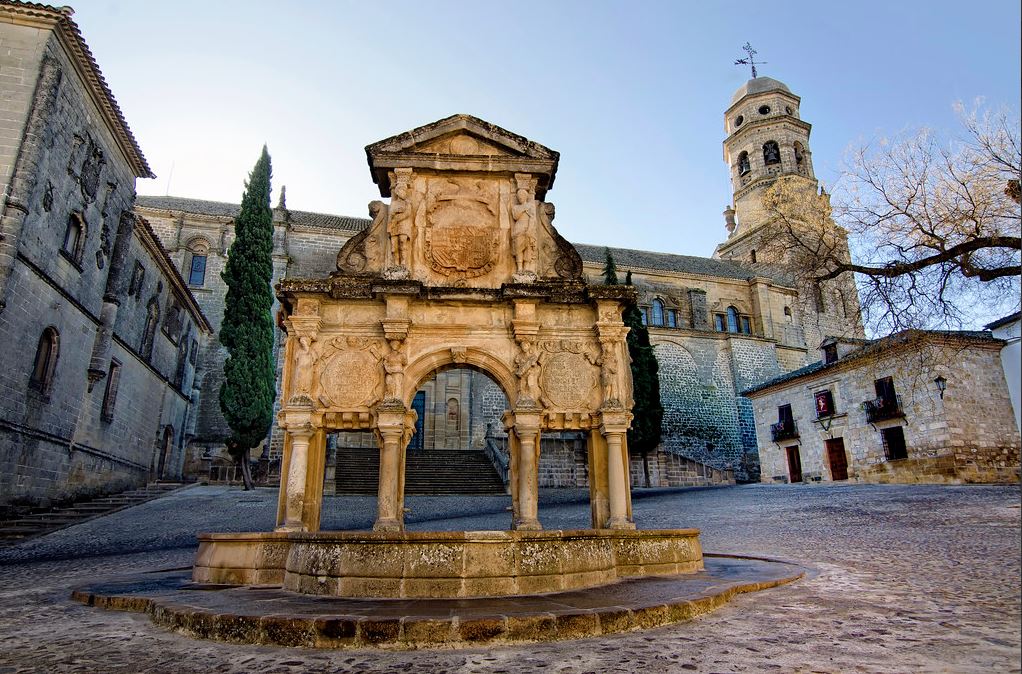
2. Baeza Cathedral:
The cathedral stands on a site with a very long religious history: it was used as a mosque under Muslim rule and later became a church again. Its rebuilding was entrusted to Andrés de Vandelvira. This long history explains its mix of Mudéjar, Gothic and Renaissance features.
You can buy tickets and check opening times here: https://catedraldebaeza.es/visita-cultural/
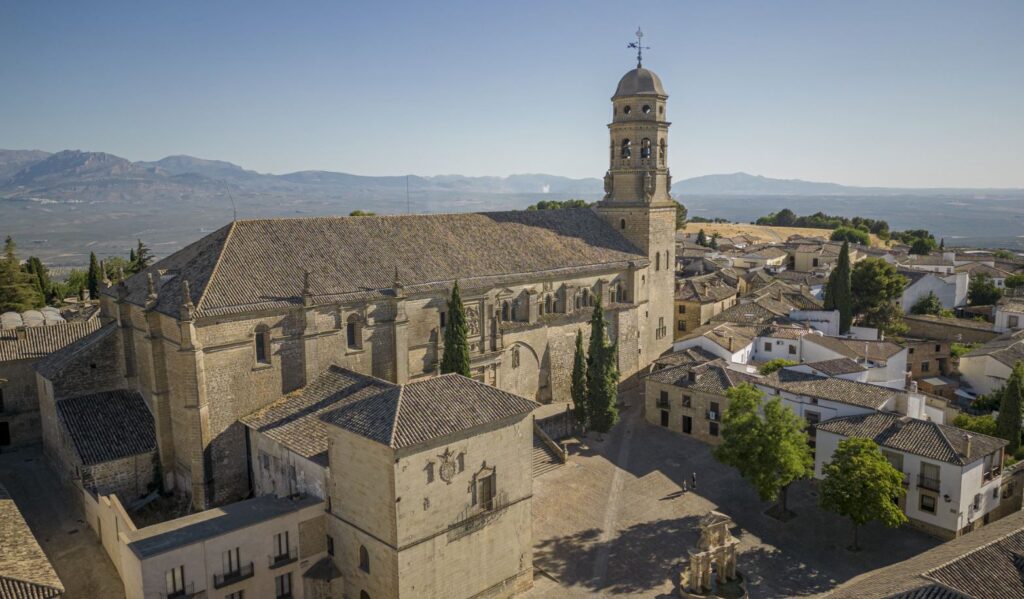
3. Palacio de Jabalquinto:
One of the town’s most impressive Gothic buildings, built in the 15th century, with a 16th-century Renaissance courtyard.
Today it is the Antonio Machado campus of the International University of Andalusia. Entry is free.
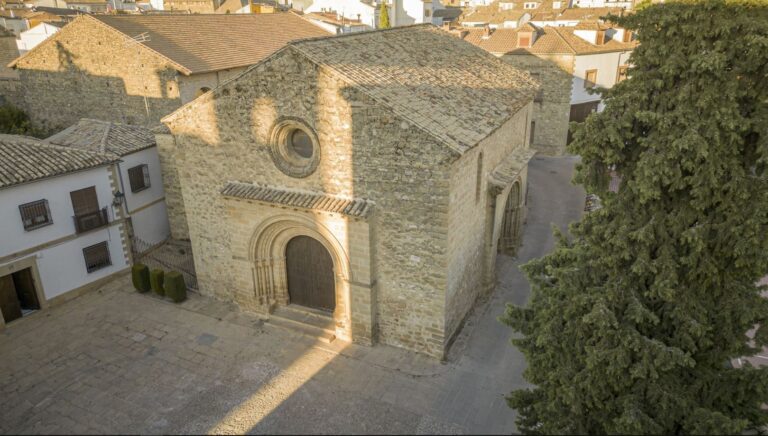
4. Church of Santa Cruz:
Opposite the palace façade is this austere 13th-century Romanesque church. It is one of the best-preserved Romanesque churches in Andalusia and one of six built after the Christian conquest of the town.
5. Old University:
Round the corner from the Palacio de Jabalquinto, along Calle San Juan de Ávila, is the Old University. The University of Baeza was founded in the 16th century, one of the early universities of Spain, although the building is now used as a cultural centre.
Entry is free, and you can visit Antonio Machado’s classroom and the university’s Great Hall.

6. Palacio de los Galeote:
Along Calle Conde de Romanones is the Palacio de los Galeote, an example of Renaissance architecture in Baeza. It has an inner courtyard with semicircular arches and Plateresque details.
One curious feature is the coat of arms of the Galeote family, the noble family who built it in the 16th century. Entry is usually included in guided tours of the town, costing between €5 and €10.
7. Puerta de Jaén and Arco de Villalar:
The Puerta de Jaén is one of the old gates into Baeza and stands out for its sturdy medieval walls, part of the original defensive wall.
Next to it is the Arco de Villalar, a triumphal arch from 1526 commemorating the victory at the Battle of Villalar, and one of the few civil triumphal arches in Spain. Together they show the town’s transition from medieval to Renaissance style.

8. Plaza del Pópulo:
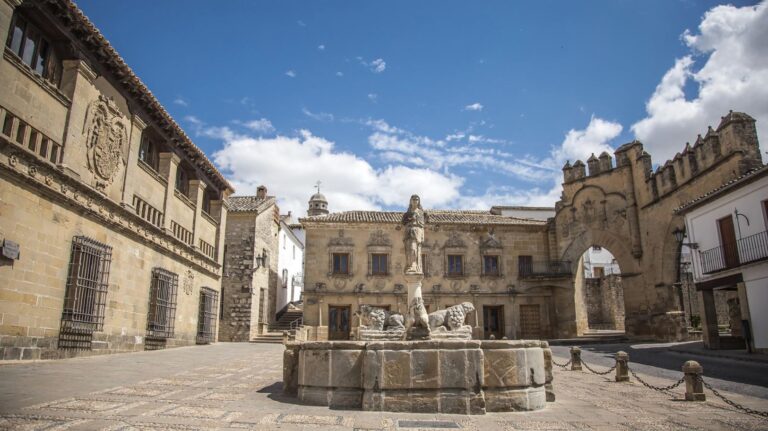
Through the Puerta de Jaén we reach Plaza del Pópulo, or Plaza de los Leones.
It is an impressive monumental ensemble surrounded by historic buildings such as the Casa del Pópulo, the Fuente de los Leones and the Arco de Villalar, all reflecting the splendour of the Spanish Renaissance.
A curious fact: the Fuente de los Leones has Iberian origins, with lions from the archaeological site of Cástulo, making the square a fascinating meeting point between ancient history and Renaissance architecture.
9. Plaza de la Constitución:
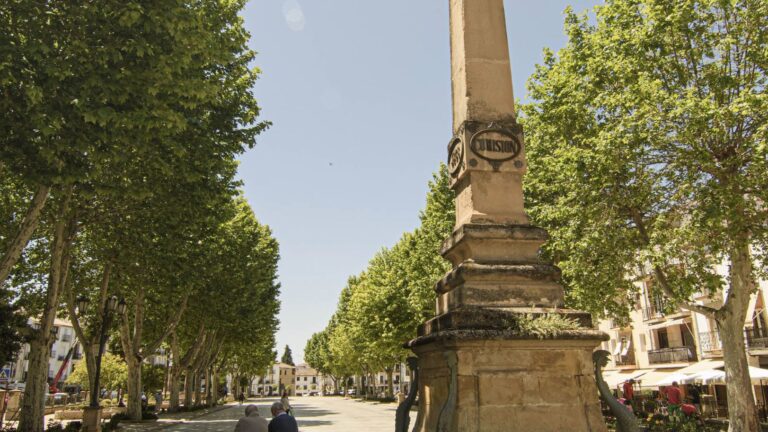
Cross the street to reach Plaza de la Constitución, today the social and commercial heart of the town, surrounded by impressive historic buildings such as the Casa Consistorial and the Balcón del Concejo.
A curious fact: its central fountain, the Fuente de la Estrella, has been a traditional meeting point for the people of Baeza for centuries.
It’s the ideal place for a break and a snack before carrying on with the Úbeda and Baeza route.
10. Antonio Machado’s House:
Antonio Machado’s House in Baeza is a museum dedicated to the life and work of the poet, who lived here while teaching in the town. It offers an interesting look at his personal and professional world.
The house-museum keeps Machado’s furniture and personal belongings, so visitors can feel the atmosphere of the time. Entry costs about €2.
11. Baeza Town Hall:
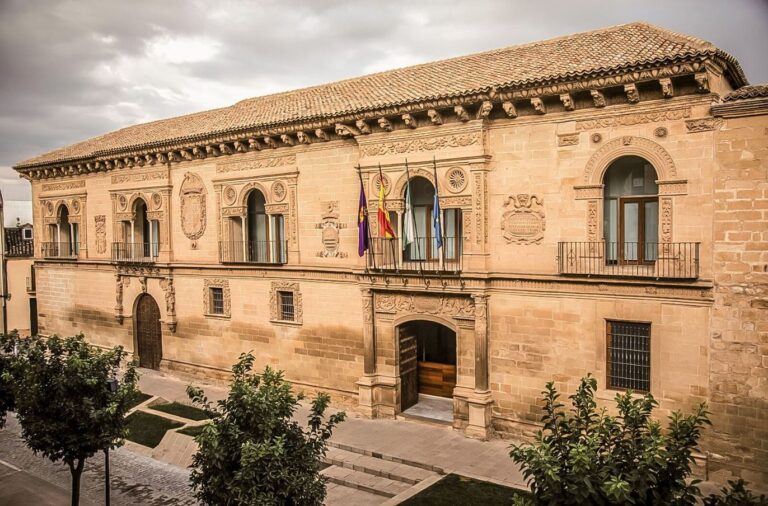
Continue along Calle Gaspar Becerra and take the first right to reach Baeza Town Hall (also known as the Casa Consistorial).
It was originally built as a prison and seat of the town council. It is famous for its façade decorated with medallions, columns and historical and mythological figures that symbolise the power and sophistication of the time. From outside you can see the underground cells of the original building.
It is open to the public for visits, as well as cultural activities and events.
12. Torre de los Aliatares:
Back in Plaza de la Constitución, next to the roundabout at one end of the square, is this defensive tower built in the Moorish period, in the 12th century. It is one of the few remains of the town’s old walls.
Guided tours of the interior are available.

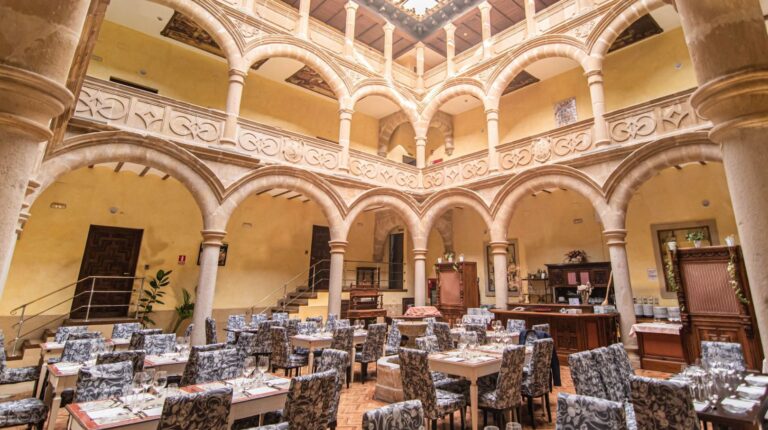
13. Palacio de los Salcedo (now a hotel, but you can eat in its restaurant, which keeps the original architecture):
A few metres up Calle San Pablo is this 16th-century palace. Today it is a hotel, and inside it keeps an Andalusian courtyard with Tuscan columns and wooden decoration. You can eat in its restaurant, which keeps the palace’s original architecture.
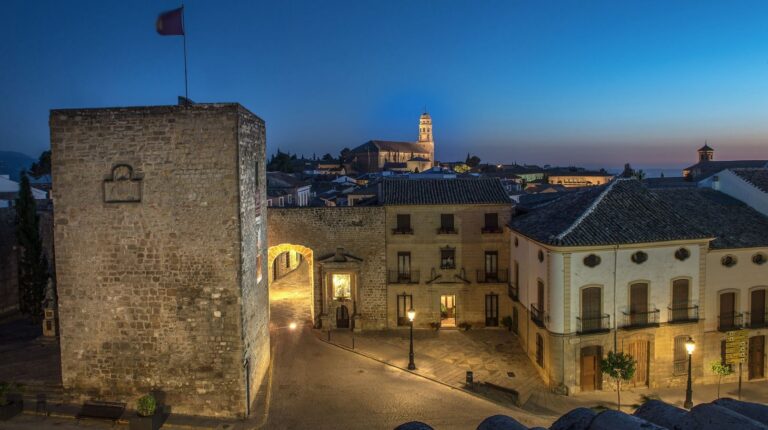
14. Torreón Puerta de Úbeda:
Retrace your steps and turn left along Calle Obispo Narváez to find the Torreón Puerta de Úbeda, next to part of the town’s defensive wall.
A curious fact: the tower was part of a defensive system of more than 53 towers, a clear example of the Islamic influence on the town.
Today it houses the “Baeza Medieval Interpretation Centre”, which you can visit for about €2.50; the visit takes around 45 minutes.
15. Mirador de las Murallas:
Along Calle de la Merced, we reach the Paseo de las Murallas, with its spectacular viewpoint over La Loma de Úbeda y Baeza.
Don’t miss the chance to rest at the viewpoint after this intense route through Úbeda and Baeza in 3 days. This is our last stop, with spectacular views over the sea of olive trees.
Final tips for Úbeda and Baeza in 3 days
The only rule on this route is to enjoy every place you visit. Take your time wherever you want to stop and look at the landscape or the architecture.
It’s a route with lots of stops, but they’re usually very close together thanks to the architectural wealth of Úbeda and Baeza.
We hope you enjoy our two beautiful towns and leave with lovely memories and a wish to come back.
See you soon!