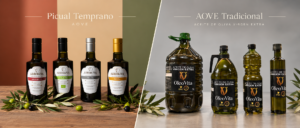
The Best Olive Oil Bottle: Glass, Tin or Bag-in-Box?
A great product like extra virgin olive oil needs the right container to preserve its properties and characteristics. A well-designed, attractive bottle also helps it sell.
Olive oil has an optimal period for consumption before its properties start to deteriorate. To make this period last as long as possible, we need to reduce oxidation, and choosing the right container is how we do it.
It’s very important to buy olive oil in a suitable bottle, always looking for containers with the characteristics we explain below.
Olive oil is a delicate product, and direct exposure to certain environmental factors can damage its properties.
These factors are:
Light: direct light on olive oil speeds up photo-oxidation and spoils its qualities. Look for an opaque or dark bottle.
Oxygen: contact with air increases the oxidation of our liquid gold, so the container needs a good seal.
Temperature: very high or very low temperatures shorten the life of the oil. The ideal storage temperature is 16-18 °C. The material of the container affects this.
Certain metals: contact with metals such as copper or iron also speeds up oxidation.
To keep olive oil in top condition for months, and even beyond a year, choose a container that reduces the impact of these external factors.
The most common materials for olive oil bottles
EVOO is packed in several types of material. Which one is chosen depends on several factors. The most common are:
1. Plastic EVOO bottles
Advantages
o PET plastic is very widely used.
o Light, strong and cheap.
o UV and oxygen absorbers can be added to the plastic (they darken it so it isn’t completely clear) to extend the life of the EVOO.
o Recyclable.
o You can see the colour of the oil.
Disadvantages
o Not recommended for reuse.
o Clear plastic speeds up the oxidation of the oil.
o It is slightly permeable, letting in moisture and gases.
2. Glass olive oil bottles
Advantages
o Available clear, tinted or completely opaque.
o Protects from light (tinted and opaque bottles) and from oxygen.
o Studies show that consumers find bottles that let them see the colour of the EVOO more attractive.
o Easy to sterilise and recycle.
Disadvantages
o Heavy and fragile.
o Only practical for small and medium sizes.
o More expensive than plastic.
3. Aluminium and tinplate olive oil tins
Advantages
o Light and compact.
o Associated with a “premium” product.
o Protect from light and oxygen.
o Wide range of sizes, from small bottles to 5-litre tins.
o Can be alloyed with other metals for the right mechanical properties.
o Recyclable.
Disadvantages
o Higher price.
o Reused tins can corrode and release compounds that speed up the oxidation of the EVOO.
o You can’t see the colour of the product.
4. Stainless steel olive oil containers
Advantages
o Excellent protection against microorganisms, light and oxygen.
o Widely used in the industry to store the oil.
Disadvantages
o Expensive for retail packaging.
o Heavy.
5. Other containers:
cartons, bag-in-box (a plastic bag inside a cardboard box) and other plastics (PVC, PE, PS); also suitable but less common.
The best olive oil bottle for extra virgin olive oil
Now that we know what shortens the life of our liquid gold and which materials are available, the question is: what is the best container for extra virgin olive oil?
Knowing the pros and cons of each material gives us some clues. But the answer comes from a study by the UC Davis Olive Center. According to its results, the best options are dark glass bottles, bag-in-box or stainless steel.
Spain’s proposed rules on olive oil bottling
When this article was written, the Spanish government was planning a decree to regulate olive oil packaging. The aim was to ban plastic bottles for EVOO of Spanish origin and so add value to our liquid gold. At the time of writing, this ban had not come into force.
Most bottlers use plastic because it is light, cheap and strong. The decree would have a direct impact, especially on large containers, where plastic is the most common material. Switching to tin or glass would mean higher costs and more weight.
Only two types of container would be exempt from the rule:
5-litre bottles filled directly at the olive mill or cooperative.
Single-serve portions: plastic single-serve portions for bars and restaurants would still be allowed.
A measure like this would give our premium product a touch of distinction both in Spain and abroad. However, it would raise costs for producers and bottlers, which would be reflected in the price.
The future isn't disposable, the future is eco-friendly