How Is Olive Oil Made? From the Olive to the Bottle
You’ve probably wondered at some point how olive oil is made, the oil we enjoy so much in our meals. Olive oil is one of the most appreciated and healthy foods in the world, known above all for its exquisite flavour, aroma and health benefits.
Its production process combines tradition and technology, and it is a fascinating process to follow. From the olive tree to the bottle on your table, each step tells a story of care, tradition and unique flavour.
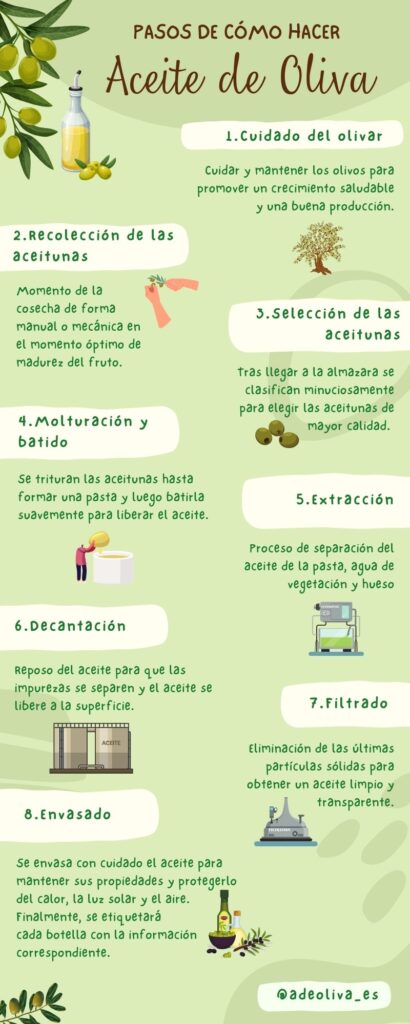
In this article we walk you through the whole olive oil making process in 8 steps, so you can discover every detail of our precious liquid gold.
Contents
1. Caring for the olive tree and its fruit
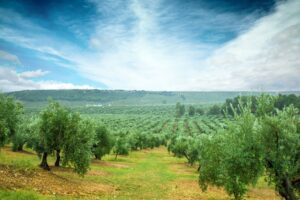
It all starts in the olive groves. Farmers take great care of every tree to make sure it gets the attention it needs to thrive.
It’s important to look after the trees all year round, and a suitable climate helps the fruit as it develops. From pruning to controlling pests and diseases, every step is essential to ensure an abundant, high-quality harvest.
This is without doubt an exciting moment that marks the start of the harvest season, when the time is right, in autumn and winter.
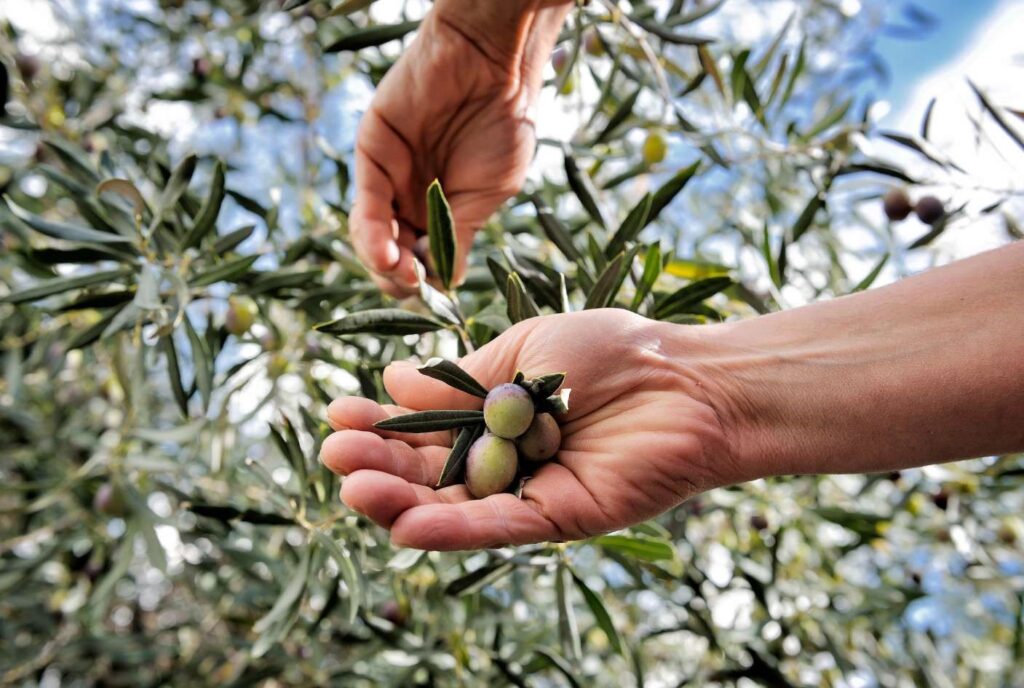
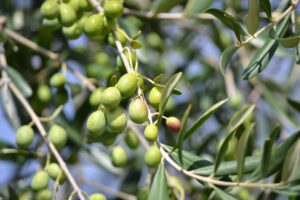
Olives can be harvested either by hand, which is gentler and more selective, or mechanically, which is faster and more efficient. Each olive is picked carefully to avoid damage and keep it intact. This keeps acidity low during production.
This step is essential: for EVOO, only tree-picked olives are used, picked straight from the tree without touching the ground, so they are free of impurities. Once harvested, the olives are taken quickly to the olive mill so they don’t deteriorate.
3. Sorting and weighing the olives
Once they reach the olive mill, the olives go through a careful sorting process. Leaves and twigs are removed from the fruit, and then the harvest is weighed to know the total amount picked.
To make good olive oil, the mill looks for olives in optimal condition and at the right ripeness, as this will affect the final flavour and quality of the oil.
4. Milling and malaxing
The olives are carefully washed to remove dirt and residues. Then they are crushed to release their juice. To ensure the highest quality olive oil, the olives should be processed on the same day they are picked.
They are crushed into a paste, which is then gently mixed (malaxed). This step is crucial to release the precious oil held in the olive cells and prepare it for the next step: extraction.
5. Extraction: the key step in olive oil production
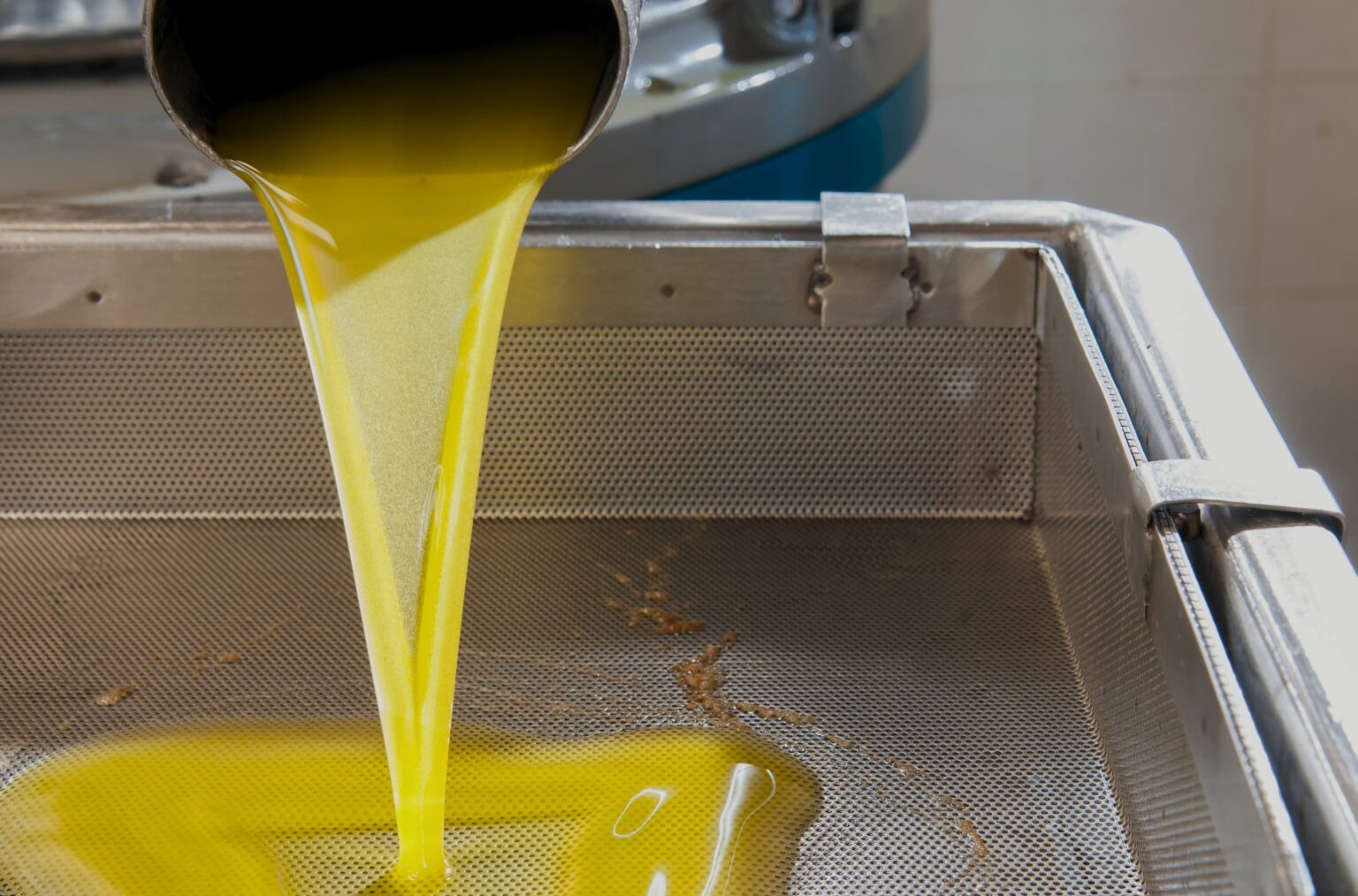
The paste goes into a traditional hydraulic press or, more commonly today, a centrifugal decanter, which separates the oil from the rest of the pulp, the stone and the vegetation water.
This step gives us the oil, the pomace and the vegetation water. The oil is then sent to a vertical centrifuge, where suspended particles are removed.
“Unlike other types of oil, extra virgin olive oil is obtained solely by mechanical means, without heat treatment or chemicals. The temperature during this step must stay below 27 °C to guarantee the quality of the EVOO. This is what the label calls cold extraction (often known as cold pressed olive oil), and it preserves even more of the oil’s flavours and nutrients.”
6. Decanting
In this step, the olive oil is separated from any water and impurities still left, thanks to the different density of the oil.
Although we already have the liquid after extraction, the olive oil still needs to be cleaned to remove every trace of solid particles.
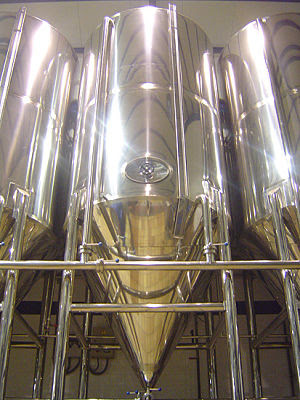
To do this, it is left to settle in large conical tanks, so the sediment sinks to the bottom and the oil rises to the top.
The temperature should stay at around 18 °C at all times, and the oil is protected from light so its qualities are not affected. This step is key in olive oil production to guarantee its purity and quality.
7. Filtering
Before bottling, the last step of the process, the olive oil is filtered to remove any remaining moisture and unwanted particles. Filtering helps the oil last longer and keep its properties.
However, this step can also be skipped and the oil bottled directly. In that case it is called unfiltered olive oil, traditionally known in Spain as aceite en rama.
It is a 100% natural product made up of oil, vegetation water and tiny particles of olive stone and flesh. However, unfiltered oil should be used as soon as possible so it doesn’t lose quality.
It’s the last step, but no less important for that. It keeps the oil’s properties from going to waste by protecting it from heat, sunlight and air.
To finish the process, the oil is carefully packed in special glass bottles, plastic bottles or tins to preserve its freshness and flavour.
The right container keeps the product in excellent condition until it is used. This prevents the oil from oxidising or fermenting and keeps its quality exceptional.
Each bottle is labelled with detailed information about the origin of the oil, its variety and its sensory characteristics, ensuring transparency and traceability.
Now that you know how olive oil is made, you’ll appreciate this great gift of nature even more. Use it in your recipes whenever you like and enjoy all its benefits.